When a Cream Feels Too Heavy: Compare Texture Before Replacing It
A rich cream can feel uncomfortable without being the wrong product. Notice when the heaviness appears, adjust how much you use, and compare the finish before deciding to switch.
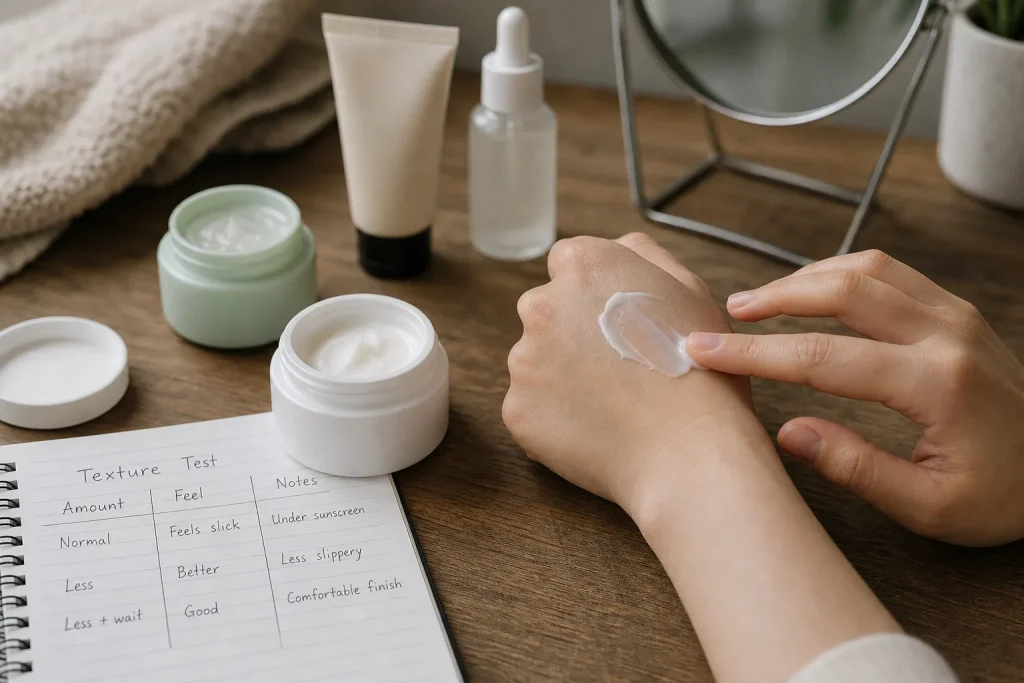
A cream that leaves a waxy film after your morning routine may feel different after an evening wash. That change is useful information: heaviness can come from the amount applied, the layers beneath it, or a finish you simply dislike. Before replacing the product, notice when and where the discomfort appears. A few careful adjustments can help distinguish a texture mismatch from a routine that needs less on the skin.
What feels heavy?
“Heavy” can describe several sensations. A cream might feel thick while you spread it, tacky after application, slick under sunscreen, or persistently coated on the skin. Naming the sensation makes the next choice clearer. A spreadability problem calls for a different comparison than a finish that bothers you an hour later.
Notice the timing, too. Does the feeling begin as soon as you apply the cream, or only after another product goes on top? Does it affect your whole face or gather around the nose and chin? Those details point toward different adjustments. A product can feel rich in the hand but settle comfortably, while a lighter gel can remain sticky in a way you dislike.
Could the amount be the issue?
Yes. A generous layer can leave more residue than your skin wants, even if the cream’s texture otherwise suits you. Try using a smaller amount and spreading it in a thin, even layer. Give it a moment to settle before deciding whether it still feels uncomfortable; repeatedly adding more to chase a plush feeling can create the very coating you want to avoid.
Use your usual amount as a reference, not as a rule. The amount that feels comfortable can change with the area you are treating, what you have already applied, and how your skin feels that day. You might use less across the forehead and more on a dry-feeling patch, rather than applying one thick layer everywhere.
Are other layers contributing?
They may be. A cream’s finish can change when it sits over a serum or beneath sunscreen. Two products that feel pleasant alone may combine into a tacky or slippery layer. To isolate the cause, keep the rest of your routine familiar and alter one part at a time: reduce the cream, change when you apply it, or briefly compare its feel without a nonessential layer.
Avoid changing several products together. If the finish improves, you will not know which adjustment mattered. Think of layers like papers stacked on a desk: one sheet lies flat, but a loose stack can slide and bunch. The analogy is limited, but it captures why a cream’s feel is not always just the cream’s feel.
How can you compare textures?
Compare how products spread, settle, and feel after application—not just how thick they look in a jar. A gel-cream may spread easily and leave a lighter finish; a balm-like cream may feel more coating. Those descriptions are clues, not promises. Texture and comfort vary by formulation and personal preference.
Say you find a familiar cream slick beneath your usual sunscreen. You apply a thinner layer on one ordinary morning, keep the other products the same, and let the layers settle before putting on sunscreen. If the slippery feeling eases, the amount may have been the main issue. If it remains, you have a reason to compare a different finish rather than assuming you need a completely different kind of routine.
If you are comparing options, consider how they behave in the routine where you plan to use them. A cream that feels comfortable at night may not suit the finish you want under daytime products. A lighter texture might be more pleasant in one setting, while a richer one may feel better when you prefer a more substantial layer. You do not need to make one texture work for every moment.
Should you replace the cream?
Replace it if you have tried a reasonable adjustment and its feel still gets in the way of using your routine comfortably. A product can be suitable in general and still be wrong for your preferences. You do not need to keep it simply because its texture is popular, or because you have already worked it into your routine.
Before switching, decide what you want less of: slow spreading, tackiness, shine, or a coated finish. Then compare products with that specific preference in mind. “Lighter” can mean a quicker-spreading lotion, a less persistent finish, or simply a smaller amount. Those are not the same quality, so a precise preference is more helpful than a broad label.
When should you stop?
Stop using a product if it causes concerning irritation, swelling, or another significant reaction, and seek advice from a qualified health professional when appropriate. This is different from disliking a rich or sticky finish. For ordinary texture discomfort, a modest change in amount or timing is a reasonable place to begin.
Let comfort guide the decision. If a thinner layer feels better, keep using the cream that way; if the texture remains distracting, choose a finish you are more willing to use. The useful distinction is not whether a cream is objectively too heavy, but whether its feel fits the place it has in your routine.
More to linger over
A Travel Shelf in One Pouch: Keep the Routine Familiar Away from Home
A compact travel routine works best when it preserves the products and habits your skin already…

The Clean-Hand Pause: A Small Application Habit Worth Keeping
A brief pause to wash and dry your hands, clear a surface, and arrange products can…