The Clean-Hand Pause: A Small Application Habit Worth Keeping
A brief pause to wash and dry your hands, clear a surface, and arrange products can make skincare application calmer and more consistent. Build the habit around the moments when it helps, rather than adding ceremony to every step.
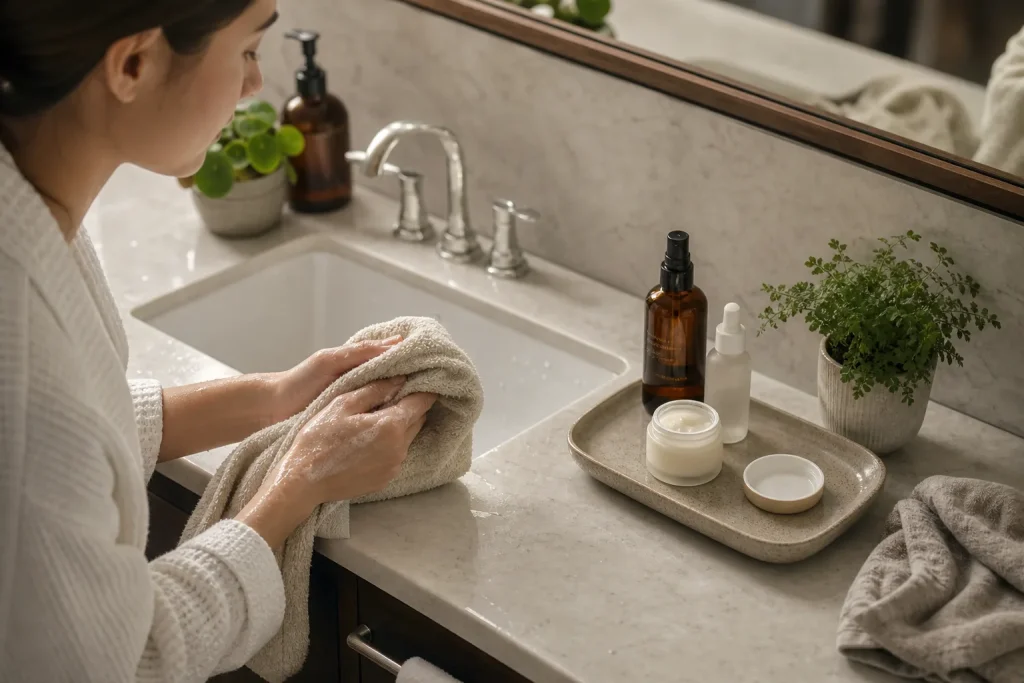
Before opening a jar of moisturizer, wash and dry your hands, then clear a small place to set the lid. That pause can make application feel calmer because you are not juggling a phone, a damp towel, and an open container at once. It is a modest habit, not a new skincare rulebook: the aim is to make the routine easier to repeat.
For one week, use the same simple setup at the sink or wherever you usually apply products. Keep it limited to clean hands, a stable surface, and the products you already intend to use. If a step feels fussy, adjust the setup rather than adding more steps.
Prepare the space
Choose a surface that stays dry and is easy to wipe, such as a clear section of bathroom counter or a small tray. Move aside anything that tends to interrupt the routine: a hairbrush, a wet washcloth, or a pile of mail. You do not need a dedicated organizer. A clean saucer can hold a jar lid; a washable tray can keep a few bottles upright.
Put only the products needed for that session within reach. Keep caps closed until each product is ready to use. This reduces the chance of knocking something over or losing track of which container you opened. Think of the surface like a small cutting board in a kitchen: it gives the work a clear place, without turning the whole room into a project.
On the first day, notice what gets in the way. If you have to reach across the sink for a cleanser, move it closer. If a product is stored where water splashes, find a drier spot. The point is not to arrange everything beautifully. It is to make the next action obvious.
Build the pause
At the start of each morning and evening routine, wash your hands with soap and water, then dry them with a clean towel. Dry hands are easier to use for handling containers and applying products without a slippery grip. If you have just washed your face, let the water drain from your hands before picking up a jar or bottle.
Open one product at a time. Use the dispenser as directed; if the container is a jar, avoid placing the lid on a wet or cluttered surface. Close the container before reaching for the next one. This small rhythm keeps the counter orderly and gives you a natural pause between products.
Do not turn the habit into a reason to scrub your hands repeatedly. Ordinary handwashing is enough for a routine at home. If your skin is easily irritated, choose a gentle hand cleanser and apply hand cream after the skincare routine, rather than trying to make the pause feel more elaborate.
Follow the week
Days one and two: Set up the surface and wash and dry your hands before starting. Keep the routine itself unchanged. At the end, notice whether you had to search for anything, touch a wet counter, or handle several open containers at once.
Days three and four: Make one practical adjustment based on what you noticed. Move a frequently used product closer, place a clean cloth under a bottle that tends to drip, or choose a different spot for the lids. Avoid reorganizing every shelf; a single change is easier to judge.
Days five and six: Keep the setup steady. Pay attention to the moments when the pause is useful, such as before using a jar or after handling a phone. If you are only using a pump bottle and your hands are already clean, do not add extra ceremony for its own sake.
Day seven: Decide which parts deserve to stay. Keep the handwashing and a clear surface if they make application more comfortable. Drop any tool or arrangement that creates another chore. The habit should support the routine, not compete with it.
When plans change
Some evenings are rushed, and some mornings begin with a child calling from another room. In those moments, keep the pause small: wash and dry your hands, set down what you need, and proceed. If the counter is occupied, use another clean, dry surface rather than balancing a container on the edge of the sink.
Say you reach for a face cream after putting away groceries, and the counter is crowded with a damp sponge and a mug. Move the mug and sponge, wipe and dry a clear patch, wash your hands, then open the cream and close it before moving on. The expected result is a less cluttered application, with the product handled without balancing its lid beside wet items.
If you notice a product has been contaminated or its packaging is damaged, follow the label’s directions and contact the manufacturer or a qualified health professional if you have a skin concern. A clean-hand habit is useful housekeeping, not a way to make an unsuitable or compromised product safe.
Keep it comfortable
The most durable version of this routine is the one that fits your actual space. In a shared bathroom, a small washable tray can be moved in and out. At a bedroom dresser, a clean cloth can protect the surface from drips. If you have limited counter space, set out one product at a time and return it to storage after use.
After the week, keep the parts that remove friction and let the rest go. Clean hands, closed containers, and a dry place for lids are simple habits to return to whenever a routine starts to feel scattered. The useful pause is not time spent arranging a perfect counter; it is the moment that lets you apply what you already chose with a little more ease.
More to linger over
A Travel Shelf in One Pouch: Keep the Routine Familiar Away from Home
A compact travel routine works best when it preserves the products and habits your skin already…
When a Cream Feels Too Heavy: Compare Texture Before Replacing It
A rich cream can feel uncomfortable without being the wrong product. Notice when the heaviness appears,…