A Travel Shelf in One Pouch: Keep the Routine Familiar Away from Home
A compact travel routine works best when it preserves the products and habits your skin already knows. Compare a decanted core, original packaging, and a pared-down set to choose what belongs in your pouch.
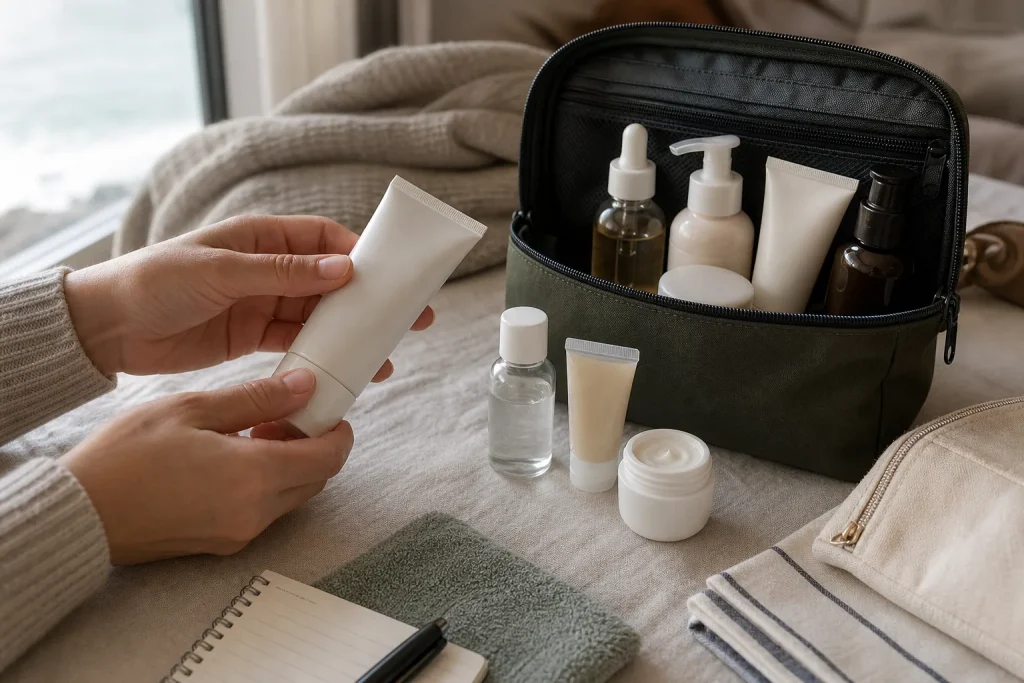
A travel skincare pouch works best when it carries familiar products in packaging suited to the trip. A cleanser that rinses comfortably, a moisturizer you already use, and your usual sunscreen may be more useful than a set of unfamiliar miniatures. The practical question is not how to fit the whole bathroom shelf into one bag. It is which products can travel in their current packages, which may be suitable for transfer, and which can stay home.
There are three sensible approaches: decant selected products, keep them in their original packaging, or pare the routine back. A product’s formula, dispensing design, storage directions, and your trip all matter. When packaging or handling instructions are unclear, keep the product in its original container or ask a pharmacist or the manufacturer for guidance.
Decant Familiar Products
Small reusable containers can reduce bulk while keeping the formula familiar. This can suit a longer trip or a product sold only in a package that is awkward to carry. It is most straightforward with products whose packaging and instructions allow transfer, such as some cleansers or lotions.
Choose a container made for personal-care products, with a closure that suits the formula. A squeeze tube may work well for a lotion; a thick cream may be easier to dispense from a suitable wide-mouth pot. Packaging is not interchangeable for every product, though. A formula may depend on a particular dispenser or storage conditions, so check its label and manufacturer guidance before transferring it. Avoid containers that previously held food, cleaning products, or another cosmetic.
If transfer is appropriate, wash the reusable container according to its care instructions and let it dry completely. Use clean, dry hands or a clean cosmetic spatula, and avoid touching the inside of the container or lid. Label the new container with the product name and, if useful, its directions. Keep the original packaging or a note of the product details if you may need to refer to them.
Do not combine remnants from different packages or refill a partly used container without first cleaning it according to its care instructions. The original product label and manufacturer guidance should take precedence, since suitable handling can vary by formula and packaging. If you cannot clean and dry a container properly, or cannot confirm that transfer is appropriate, use the original package or leave the product at home. If a product changes noticeably in smell, color, or texture, stop using it and seek advice from a pharmacist or the manufacturer.
Keep Original Packaging
Keeping a product in its own package avoids transfer and keeps its label with it. Pumps, tubes, droppers, and other dispensers are designed for their specific products, and the original format may make application easier or cleaner. This is often the more straightforward choice for a serum with a precise dropper, a specialized treatment, or a product whose directions call for particular storage or handling.
The tradeoff is space and the possibility of leakage. Check that caps close properly and that the package is not cracked or damaged. Put products in a washable, leak-resistant pouch, apart from clothing and electronics. A separate sealed bag may contain a spill, but it does not fix a faulty closure.
Do not add plastic wrap beneath a cap unless the product’s packaging instructions or manufacturer confirm that this is suitable. A liner can interfere with how a closure fits or functions. If a package seems unreliable, choose a compatible replacement only when the product’s guidance allows it; otherwise, leave it behind or take a different familiar product in sound packaging.
Pare Back Carefully
A pared-down routine takes the products you use for distinct, useful purposes. This can suit an overnight stay or a trip with limited baggage space. It is not a reason to replace familiar products with a collection of sample packets or to change a prescribed routine for convenience.
For many people, the core may include a cleanser, moisturizer, and daytime sunscreen. If you use a prescribed treatment, follow the directions from your clinician and the product’s storage instructions. Optional products can stay home when they do not serve a clear purpose on the trip.
Keep the order and timing familiar where possible. If you normally apply a treatment to clean, dry skin, do not squeeze it into a rushed sequence just because you are away. Travel can change weather, indoor heating, washing habits, and time outdoors; adding unfamiliar products at the same time can make it harder to tell what is affecting your skin.
Say you are staying a few nights with a friend and your usual routine includes a gentle cleanser, moisturizer, sunscreen, and fragranced face mist. You could leave the mist behind, carry the cleanser and moisturizer in their original small tubes, and bring your usual sunscreen in its own package. The expected result is a pouch with fewer items while your familiar cleansing, moisturizing, and daytime protection habits remain intact. If the cleanser’s package is bulky, check its transfer guidance before deciding whether a suitable travel container is an option.
Choose By Product
These approaches need not apply to every item in the same way. Think of the pouch like a small kitchen drawer: keep the tools you use, but do not move every ingredient into a new jar just to make the drawer look uniform. Check each product and let its packaging and directions guide the choice.
- Cleanser: Check whether the original tube closes securely and fits the pouch. If it does, keep it; if it is bulky, check the product’s transfer guidance and use a suitable clean, dry container only if transfer is allowed; otherwise, leave it in its original package or choose a familiar compact cleanser.
- Moisturizer: Check the label for storage and handling directions and consider whether its pump or tube helps keep application clean. If transfer is allowed and the original package is awkward, use a compatible clean, dry container; if the directions are unclear or the package is damaged, keep it intact and seek manufacturer guidance or leave it behind.
- Sunscreen: Check that the product remains clearly identified and that its use directions are available. If the original package is sound, bring it as labeled; if it is damaged or difficult to close, use another familiar product in sound packaging rather than an unlabeled transfer container.
- Serum or treatment: Check whether the formula uses a dropper, pump, or special storage directions. If so, keep it in its original dispenser; if its packaging is damaged or the directions are unclear, ask a pharmacist or the manufacturer before changing containers.
- Prescribed product: Check the clinician’s directions and the label for storage requirements. If the original package can travel safely, keep it intact; if you cannot meet its stated conditions or need to change its packaging, ask the prescribing clinician or pharmacist before the trip.
- Optional extras: Check whether each item serves a specific purpose during this trip. If you would not miss it in your usual routine, leave it home; if it supports a familiar habit you want to maintain, pack it in its original package when practical.
Make The Choice
Use three questions to settle each packing decision. First, does the product serve a regular purpose you want to maintain? Second, can its original package travel without taking up unreasonable space or creating a leak concern? Third, if you are considering a new container, do the product’s directions allow transfer, and can the container be cleaned, dried, and labeled appropriately? If the product is optional, leave it out. If it matters but the package is awkward, transfer it only when the manufacturer’s guidance supports that choice.
Trip conditions can change the decision. A day outdoors may make your usual sunscreen a priority. A stay with limited sink space may favor a compact cleanser in its original tube. A trip with several stops may call for secure packaging over a jar that could open in a crowded bag. These are reasons to choose familiar products carefully, not to add unfamiliar formulas at the last minute.
Before leaving, check every closure, label, and container. Keep products away from extreme heat and direct sunlight, and follow their storage directions. If the instructions require conditions you cannot provide during the trip, ask a pharmacist or the manufacturer rather than guessing. A useful travel pouch keeps familiar care easy to use while respecting the packaging each product calls for.
More to linger over
The Clean-Hand Pause: A Small Application Habit Worth Keeping
A brief pause to wash and dry your hands, clear a surface, and arrange products can…
When a Cream Feels Too Heavy: Compare Texture Before Replacing It
A rich cream can feel uncomfortable without being the wrong product. Notice when the heaviness appears,…